Episode 1: First Encounters
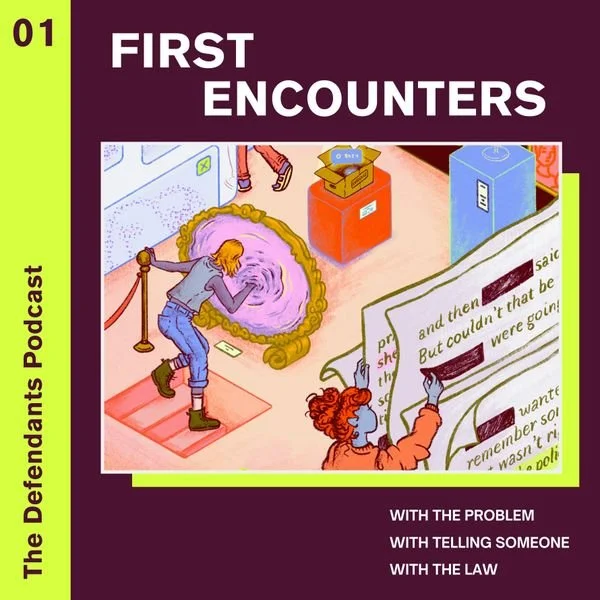
We take a look at first encounters: with the justice system, with telling someone, and with the law. We're looking beyond the headlines to the root issues underneath, and exploring the first steps in the process for victims: disclosure and the decision to go to the police.
What happens in the hours, days, and months after sexual violence is disclosed?

The moment a survivor tells someone what happened can shape everything that follows.
In the first episode of The Defendants, we examine the earliest stages of the legal process following sexual violence: disclosure, reporting, and the decision to engage with the criminal justice system.
For many survivors, the first encounter is not with a courtroom or a judge. It is with a friend, a family member, a teacher, a healthcare professional, or a police officer. These early interactions often determine whether a person feels supported, believed, and safe enough to move forward.
Through conversations with survivors, legal experts, advocates, and researchers, we explore how reporting decisions are made, why many incidents never reach police, and what barriers continue to prevent people from seeking justice. We also examine the assumptions embedded within the legal system and how they can influence outcomes long before a case ever reaches court.
This episode asks a deceptively simple question: what happens when someone decides to tell their story?
Key Moments
0:10 - Accused rights and victim rights
3:56 - Jane's police interview
6:32 - Understanding legal terminology: complainant, defendant, accused
7:51 - Who supports victims through the system
10:57 - Shannon's story: the permanence and power of a statement
12:07 - Cross-examination and victim preparation
15:18 - Defence lawyer perspectives
20:16 - Striking a balance between accused and complainants' rights
Key Topics
Featured Guests
Dr. Elaine Craig, law professor at Dalhousie University & author of Putting Trials on Trial
Shannon Burns, award-winning broadcaster at iHeartRadio Canada
Cait Alexander, survivor & activist
Riley (pseudonym), survivor
Georgia (pseudonym), survivor
All sources, statistics, multimedia clips, and music credits are available on Substack.
Takeaways
• Most sexual assaults are never reported to police.
• Initial disclosure experiences often shape reporting decisions.
• Victims rights and accused rights are not necessarily in conflict.
• Credibility can be influenced by social assumptions.
Questions Explored
• Why do many survivors choose not to report?
• How do first responses affect long-term outcomes?
• What role do the police play during the earliest stages of a case?
• How does the justice system shape decisions to report?
Transcript
Disclaimer: This podcast explores sexual violence and the court process surrounding it. Please listen with this in mind, and be kind to yourself. We have resources in the show notes.
Jane Aster Roe: When I was 15, I gained a secret. It occupied my entire headspace, and I had to try to cram it to the side of my brain whenever anyone asked for my attention. It was louder and brighter than everything else in the whole wide world. Worse than that, it was unspeakable. I had promised never to speak it. I had promised myself, and I had promised the man who had given me the secret. But by the time I was 17, I was choking on it. I couldn't sleep or eat or really be anymore.
My friend took me for a drive, and I spent thirty excruciating minutes trying to give it a voice. Finally, she opened the notes app on her phone and handed it to me. I typed, shoved it back to her, and buried my face between my legs so I wouldn't have to see her when she read the words I'd written: I'm pretty sure [redacted] sexually assaulted me.
She reached over and took my hand. And suddenly, I remembered how to breathe.
My name is Jane Aster Roe. You're listening to The Defendants, an exploration of justice for victims of sexual violence. We want to know what has to change within the system for it to actually work, and we are interrogating what justice means in the aftermath of trauma.
This is a podcast where we figure out how this system is broken, why, and what to do about it. Because we can't just live in a world where acts of sexual violence can be committed with impunity. And we can't live in a world where the remedy is so painful for the people it's intended to help.
This is Episode One, First Encounters: with telling someone, with the problem, with the law.
You've seen the headlines…
Audio Clip: "…not guilty…"
Audio Clip: "…not guilty…"
Audio Clip: "…not guilty…"
Jane Aster Roe: Sexual assault cases are moving through the court system. They live in our headlines, in our social media feeds, in the TV shows we watch and in the stories we read.
A growing consensus seems to be not whether or not sexual assault and rape happens, but that it does happen, and when it does, it's nearly impossible to get justice afterwards.
Audio Clip: "We begin here today with a landmark ruling of the #MeToo era, reversed. Harvey Weinstein's conviction in New York has been overturned, sending shockwaves through the courts…"
Jane Aster Roe: We all remember 2018 and the floodgates that opened with #MeToo, building on the work of activists like Tarana Burke and the reporting of journalists like Megan Twohey and Jodi Kantor. During that period, victims came out, stepped forward and shared the fact that they were survivors of sexual violence. And there were just so many of them.
And honestly? I don't know that there has been that much structural change that has come from it.
When you crack open the topic of sexual violence and start talking to women, you realize it's difficult to find one who doesn't have either a personal experience, or know someone who does.
To rattle off some quick stats, it's estimated that between one in three and one in five women will experience attempted or completed rape during their lifetime and all that's before we start talking about traditionally marginalized communities.
Black and Indigenous women are disproportionately at risk, with studies showing between forty to sixty per cent of Black girls are subject to sexual coercion before the age of eighteen, and Indigenous women's reported rates of rape triple white women's.
Transgender individuals, too, are four times more likely to be sexually assaulted.
And while yes, women dominate the conversation because they dominate the statistics, it would be a huge mistake to think boys and men are immune from sexual assault. Between one in seven and one in ten men will experience attempted or completed rape, most often perpetrated by other men.
It's important to view these stats with the knowledge that it's actually hard to get accurate data because a lot of these numbers are based on crime data and we know the overwhelming majority of people are not reporting their assaults to the police, so these numbers may be higher.
Our sources for the stats are in the show notes by the way, if you want to check them out.
The stats we do have tell us that this is persistent and pervasive. It's impacting all of us, whether we know it or not. But many people also have an inability to compute that anyone they even peripherally know could commit such an act. They often side with victims, unless they personally know the perpetrator.
Often conversations about sexual violence come to an end after the headlines because the general public is afraid of it and honestly it's fucking miserable to talk about. But I invite you to keep going. Because being informed is what allows us to push for change.
Jill Amery: "The incident was horrible, and then the court case came about and I do feel that it was worse than the assault."
Sandy Garossino: "We're using it because we've always used it. To a certain extent I feel like we should be throwing the whole thing out and starting again."
Dr. Elaine Craig: It wasn't designed to work well for survivors of sexualized violence.
Cait Alexander: I'm calling it an injustice system because that's what it is.
Jane Aster Roe: These are the messages that victims of sexual violence hear when they go through the justice system in the United States and Canada. Police, prosecutors, and social workers will tell you that the system is broken. I'd like to propose something else. This is not a broken system. Because it has never worked. The justice system is working exactly as it was intended to, and it was never built to deal with crimes like this which is why victims walk away feeling so traumatized.
Justice can mean many things, for many people, and it doesn't have to mean the traditional justice system. I've spent a lot of time now talking to people who have been through sexual violence and I think the running theme is that what people want most is accountability. An acknowledgement of harm caused.
In order to get there, the first thing you have to do is disclose that something happened. And that's a really hard thing to do.
Hey, I couldn't even say it out loud. I had to write it down and couch it in an uncertainty that wasn't even real. I wrote: I'm pretty sure [redacted] sexually assaulted me. I was sure, and my friend knew that. But writing that I wasn't made it less big and scary.
Shannon Burns: So, throughout that whole five years, I didn't tell a single person, somehow, living with my three other siblings, at some points his two kids as well, and my mom…
Jane Aster Roe: This is Shannon Burns. She's speaking about the abuse she suffered at the hands of her stepdad.
Shannon Burns: No one ever knew that any of that was going on, which is wild to even think about, like, living in a house with that many people and them not even knowing. But he was very strategic about it. He was very smart. He would manipulate the people around him. He would cause there to be rifts and issues between myself and my siblings and my mom.
Jane Aster Roe: Shannon is an entertainment reporter and a host at iHeartRadio. Like me, Shannon was abused as an adolescent and didn't tell anyone for years.
I'm really sorry that happened to you.
Shannon Burns: That's okay, thank you.
Jane Aster Roe: Sorry doesn't take it away. But it's almost like it's the only language that we have.
Shannon Burns: Exactly, yeah.
Jane Aster Roe: So, when you spoke to your mom and she called the police, did she call the police right away?
Shannon Burns: So we were camping at the time, and the reason that I ended up telling her when I did is because, as a family, we'd go camping together every summer.
And it just so happened that my stepdad was asked to come back to our hometown. So that was a very unique situation, where he wasn't around and everyone else was. So I took my mom into our vehicle, because that was the only place you could go on the campsite with a little bit of privacy, and then I just told her what was going on. And then I showed her my phone as well, which had a lot of texts from him, of him blowing up my phone, and yelling at me, and all these things, which was good, because I had a little bit of proof, because I typically would just delete everything off my phone, and I just wouldn't let there be any sort of proof lying around.
And then we stayed together a few more days as a family at the campsite, because we knew that would be a good safe space for us to just talk. Because it had been five and a half years of this.
And then when we came back to our hometown, that's when we called the police. And then they came over in the cars with the sirens on, and I sat in a room with a female police officer, and like, gave a bit of my statement, and then ended up going into the police station to give a full statement.
Jane Aster Roe: The police.
After you tell someone, you are typically faced with the huge decision of whether or not to go to the police and move through a traditional justice process.
I spoke to Dr. Elaine Craig, law professor at Dalhousie University, and the author of Putting Trials On Trial, about the entire justice process. Here she is talking about the police.
Dr. Elaine Craig: A very, very small fraction of people who experience harmful sexual behavior make the decision to come forward to the police, and when someone does come forward to the police, that can be a protracted process that can take, in some cases, only a matter of weeks or months before you know, if charges are going to be laid, before charges are laid. Sometimes that can take years, depending on the nature of the case, right? Depending on whether you have a suspect that's identifiable, depending on the types of evidence that are available. Again, it's not a fast process, and it's certainly a painful one for survivors.
Jane Aster Roe: Reporting to the police is an intense and personal decision, and there, of course, isn't a right or wrong one for survivors to make.
Often, in cases of sexual offenses, it is turned onto the victim of the crime to prove that not only did the assault happen, but that they, the victim, didn't do anything to encourage sexual activities. Especially when we move into cases between adults, the most common defense is consent, and in order to prove consent, it's all too common for a victim's entire life, including dating history, job, mental health, everything, to be put on display and scrutinized. In these cases, more so than any other, a victim is treated like a guilty party. They become the defendants.
Jane Aster Roe: Riley is another survivor I spoke with. She told me about her decision not to go to the police.
Riley: When I was 17, I was groomed by someone who I was working for at the time.
I thought that it was fine to be 17 and engage in sexual relations with someone who was over 18 and more than four years older than you.
So I never went to the police in that case, because it took me until I think I was nineteen or twenty to understand that it was actually legally wrong.
Jane Aster Roe: A person under eighteen cannot consent to sexual activity if their partner is in a position of trust or authority towards them. I also spoke to Georgia, who told me about her decision not to report.
Georgia: I was molested by a family member, sometime in my adolescence. I think the hard part is because it's family, you know, the guilt of bringing something like that forward and what that would mean. I feel like also the fact now that like, it happened so long ago and the memories aren't there. I feel like that makes it very difficult to have a case.
Jane Aster Roe: Please note that Riley and Georgia are pseudonyms and Georgia's transcript has been read by an actor. Cait Alexander did come forward and the legal process took up nearly a decade of her life.
Cait Alexander: I was approached by another, another survivor. And she who still to this day have not spoken about what exactly he did to both of us, but we didn't need to, because, you know, twelve other women came forward with the almost identical story, and he was subsequently charged, and incarcerated. But that took eight years. So for my entire twenties, I spent that navigating the criminal court system that finally wrapped up in 2020 in March, early March 2020. And he went to jail. And that was that, but that is such a long, that's a third of my life.
Jane Aster Roe: When a victim does go forward to the police, they often go in with an extremely limited understanding of the justice system. What most people don't realize is that as a victim in these cases, you have very few rights.
Let's be clear. The prosecutor or crown attorney is NOT the lawyer for the victim. They represent the government, which means their goal is to prosecute – NOT to defend your rights or protect you, as the victim. As far as the court is concerned, your primary role is as a witness, who is helping the court get a conviction.
You don't want the case to be prosecuted? Well too bad - they do want to prosecute and now you have to participate.
The defense wants to bring forward evidence about your previous relationship history and subpoena all your texts? Well, it's not the prosecutors problem to protect your right from having those bad faith and in some cases illegal arguments appear.
It's not your case, it's the government's case. Your needs are not the priority of the legal system. You are just a star witness for the government.
So going through the criminal justice system feels like it requires you to moonlight as your own legal counsel, because no one else is available to do that for you. Most victims don't have an understanding of the legal system. For them it's a whole new world, with a whole new language and they have to figure out how to understand it.
By the time I got to the other end of seven years of my own legal journey I had a lawyer quip to me that I had earned an honorary law degree.
When speaking to Dr. Craig, she mentioned that she actually advises victims of sexual violence who are considering going to the police to talk to a lawyer first because the first interview is so important. It's what's often seen as the most important piece of evidence if a case moves through to trial. But a lot of people don't know that when they give their first statement.
Dr. Elaine Craig: So my advice to someone who has experienced sexual assault and is considering engaging with the criminal justice system would be to talk to a lawyer to ask themselves, what their objectives are, what their goal is in pursuing that particular legal remedy, and to do that with some legal advice. I think it would be better if everyone had independent legal advice before they went and gave their statement to the police. Some advice around that interview, I think could in some cases really save some heartache for those survivors who do end up becoming complainants in sexual assault prosecutions. But also, potentially some advice that might make some survivors decide that they don't want to embark upon that particular path. Or that there might be some other legal recourse that they might want to pursue, but just so that they can make as informed a decision as possible, based on legal advice.
Jane Aster Roe: This is striking to me. And I agree with her advice. But what's sad to me about this is speaking to the police is meant to be an open and accessible process, yet, Dr. Craig sees people having a far greater experience in this system if they first speak to a lawyer.
I think that shows us how far away we are from having a system that doesn't create more trauma for survivors. That you need to step outside it to make it work for you. Sexual violence is the most underreported type of violent crime. Statistics Canada estimates ninety-four per cent of sexual assaults are not reported to the police. The Department of Justice says more than half of the crimes that do get reported will be dropped by prosecutors before they make it to trial. If they do make it to trial, less than half of them get a conviction.
I'll say it again. This is not working.
Some prosecutors hope that maybe it will work better if more survivors report to the police.
After Jian Ghomeshi, a famous radio host in Canada was found not guilty of all charges of sexual assault, a prosecutor made this statement:
Audio Clip: "I encourage anyone who is a victim of abuse, to come forward, seek assistance, and not be afraid of what may happen."
Jane Aster Roe: That statement was made nine years ago but that sentiment is evergreen. Encouragement to come forward remains the main advice given by those within the system. But when you compare that to the headlines of what happens when victims do report, the advice to not be afraid of what might happen kind of sounds like bullshit.
Basically everyone that we spoke to who has been through the justice system, including those who actually got guilty verdicts for their abusers, when asked if they would recommend it for other victims, said no.
Do you ever think that going through the judicial process is a good idea for survivors?
Survivor: In all honesty? No.
Jane Aster Roe: But then what do we do?
To figure it out we're going to have to walk through the current pathways that are laid out for victims to get justice and see where they fail.
We need to tear apart how the system functions now, so we can figure out how we want it to function to give people what they actually need.
We do that by putting the people who have been through the system at the foundation of our conversations. Today, we spoke about first encounters: with the law, with the problem, with telling someone. There's a lot more to examine. And we'll be here with you.
For now, I want to leave you with this advice for survivors from Georgia.
Georgia: I just think that it's important to find even one person to be able to talk to about it, even if you can't do something like this or you're not ready, you know? Don't live with it by yourself. No matter how scary or how taboo or how daunting or how big you think it is, I think find one human. Even if you need to start with a cat or a dog, you know, say it. Say it out loud.
Jane Aster Roe: You've been listening to The Defendants, an Aster Roe Production. It's executive produced by me, Jane Aster Roe, Rachel Arundel and Katie Jensen. Our story producer is Jessica Strachan. Editing and sound design by the incomparable Isis Madrid and Katie Jensen. Production services by Pizza Shark. Our research producer is Charlotte Gregg, our fact checker is Rachel Bromberg and our mental health consultant is Michelle Crossman. Lindsey Keene is our outreach coordinator. Dawson Fleming is our production assistant. The voice actor featured in today's episode was Meg Barbeau. Special thanks to Annette Studios and Vanessa Zoltan. We explored a lot of information in this episode. All our sources are in the show notes. It's also there that you will find resources and organizations that offer support. Thank you for listening.
Explore more episodes.
Episode 01
First Encounters
We take a look at first encounters: with the justice system, with telling someone, and with the law. We're looking beyond the headlines to the root issues underneath, and exploring the first steps in the process for victims: disclosure and the decision to go to the police.
Episode 02
You Have the Right to an Attorney
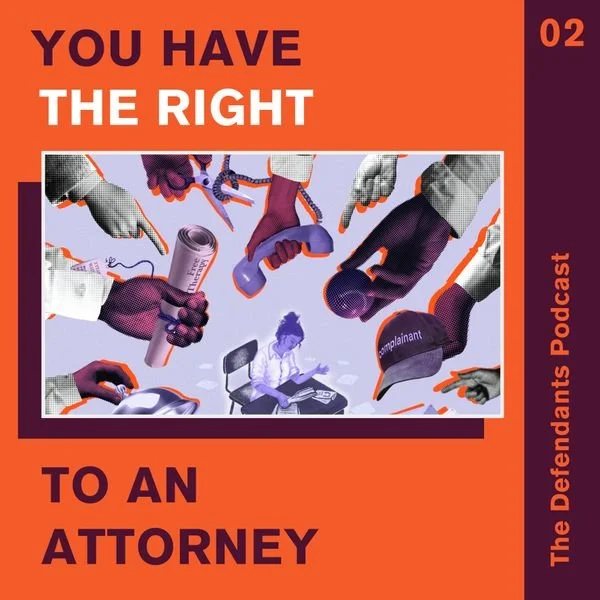
We're trying to understand how we can better insert victims' rights into the legal process, without superseding the rights for accused individuals.
Episode 03
The Perfect Victim
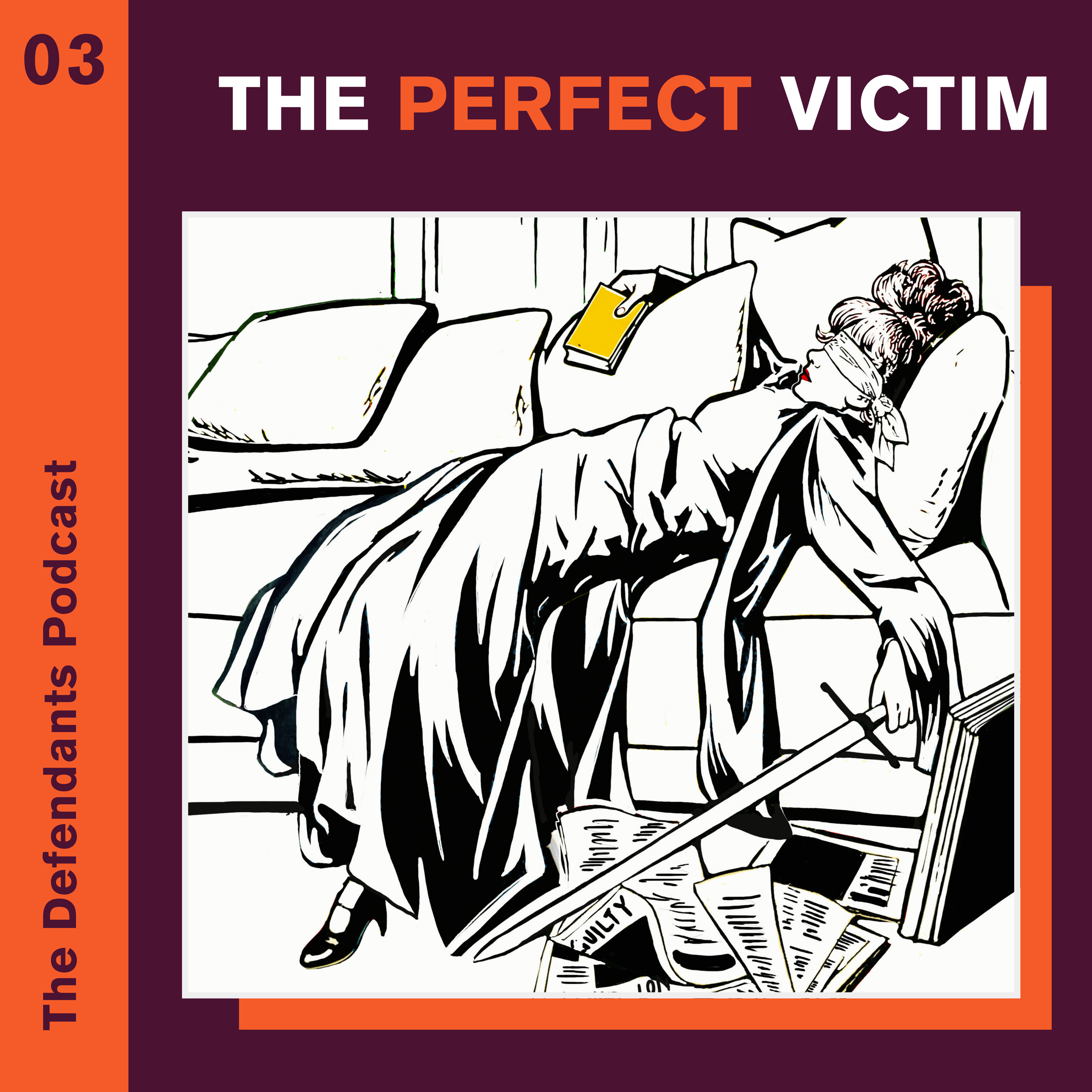
We're looking at what makes an ideal victim in the eyes of the law, and society, and who is more likely to be believed.

Episode 04
Not Guilty
We're looking at what it takes to get a verdict of guilty or not guilty, and what it means.
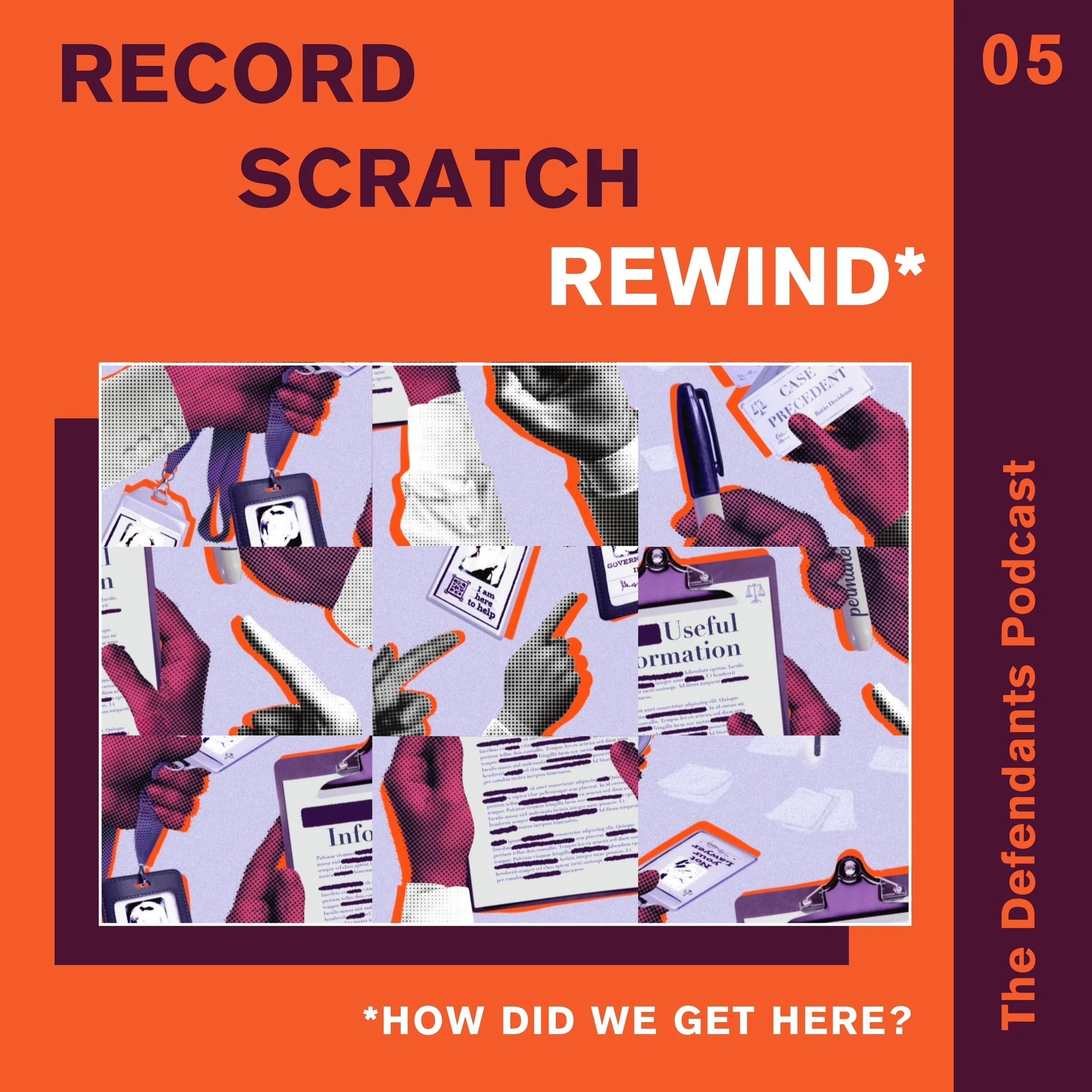
Episode 05
Record Scratch Rewind
We're going backwards so we can map our way forwards. A deep dive into the legal history and case precedent that shapes how sexual assault is prosecuted today.
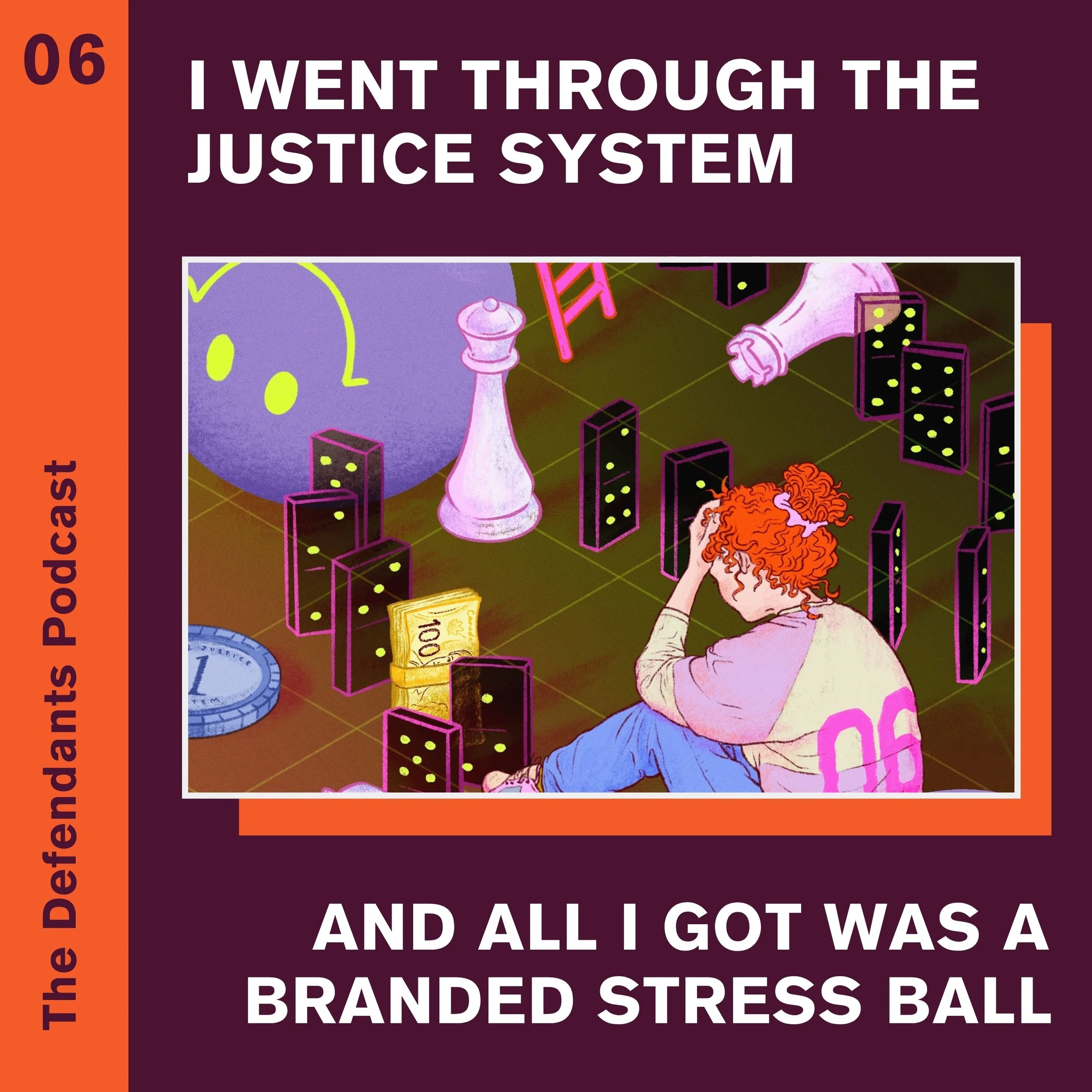
Episode 06 · Latest
I Went Through the Justice System and All I Got Was a Branded Stress Ball
A raw, powerful account of navigating the courtroom as a sexual assault survivor, and what justice (and the lack of it) actually feels like.
About The Defendants
The Defendants is a podcast exploring how sexual assault cases move through the justice system… and why it never seems to work in favour of victims. We want to know what has to change within the system for it to actually work, and we are interrogating what justice means in the aftermath of trauma. This is a podcast where we figure out exactly how this system fails, why, and what to do about it.
Support This Project
Thanks for listening and being a part of this conversation. This is a completely grassroots, independent podcast. Your support directly funds our ability to continue.
Subscribe to our Substack for additional content and ongoing conversations. We also have a mail club! Get monthly artwork and letters to continue the conversation… offline, where the best communities are built.
Make a one-time donation. Visit: https://buymeacoffee.com/thedefendants
Subscribe to this show on your preferred podcast platform Apple | Spotify
Share with a friend and help grow the conversation
Get in Touch
Questions or ideas about the show? defendantspodoutreach@protonmail.com
Follow on Instagram: @thedefendantspodcast | @jane_aster_roe
Media appearances: daltonhiggins@gmail.com
Resources for Survivors
SA Survivor Resource Document - This document contains Canadian, U.S, and global sources to find guidance, information, and aid for survivors of sexual assault. Detailed descriptions of each resource within the document.
Our Team
Jane Aster Roe - Executive Producer, Host
Rachel Arundel - Executive Producer
Katie Jensen - Executive Producer, Editor, Sound Designer
Jessica Strachan - Story Producer
Charlotte Gregg - Research Producer
Isis Madrid - Editor, Sound Designer
Rachel Bromberg - Fact Checker
Dawson Fleming - Production Assistant
Michelle Crossman - Mental Health Consultant
Lindsey Keene - Outreach Coordinator
Cheryl Grossman - Legal
Dalton Higgins - Publicity
Kathlyn Gardner - Events